
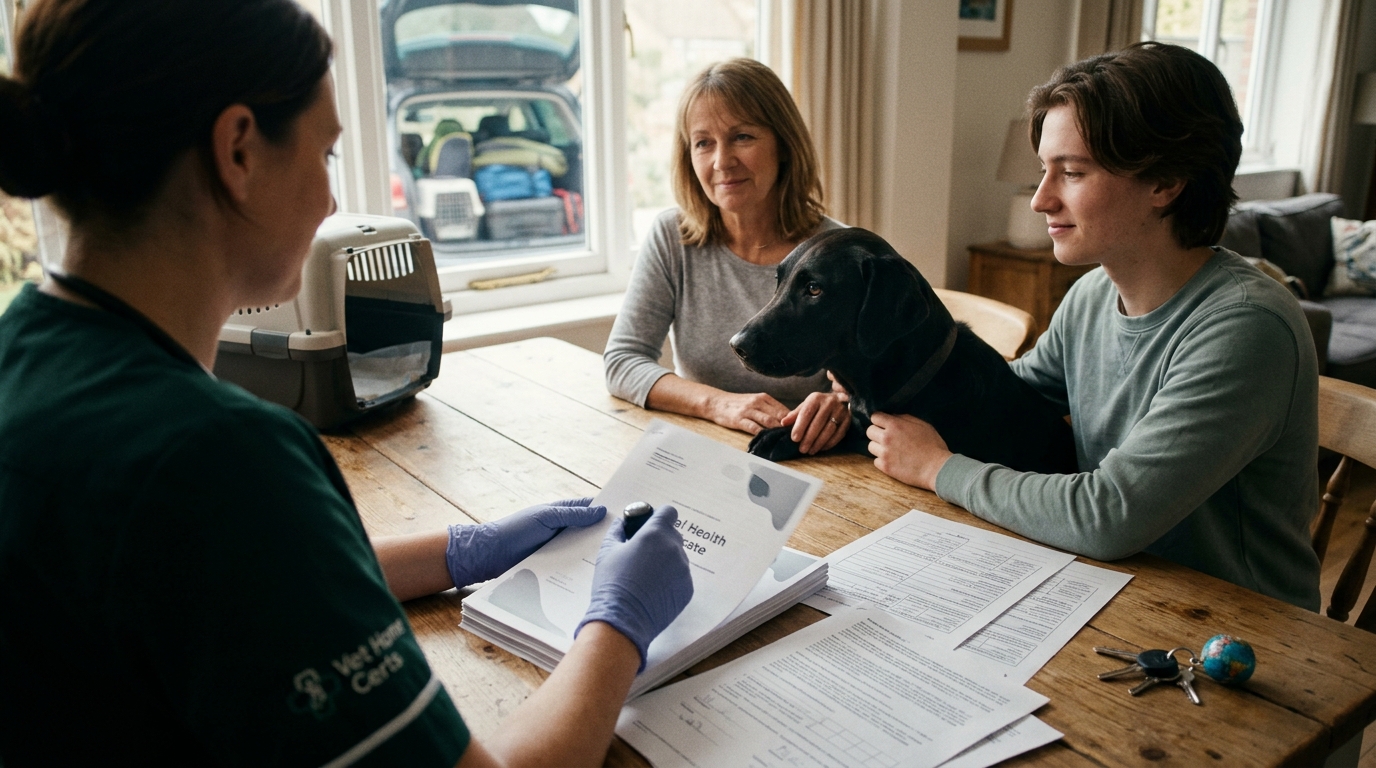
Since Brexit took effect on 1 January 2021, UK pet owners can no longer use a GB-issued pet passport to travel with their dog, cat, or ferret to the EU. Instead, you need an Animal Health Certificate (AHC) for every trip. An AHC is an official veterinary document, typically 11 to 14 pages long, that certifies your pet meets EU health requirements for travel. While the process may seem daunting at first, breaking it down into clear steps makes it straightforward. This guide walks you through everything you need to do, from microchipping to boarding the ferry or train.
What Is an Animal Health Certificate?
An Animal Health Certificate (AHC) is an official document issued by an Official Veterinarian (OV) that certifies your pet is fit and eligible to travel from the UK to an EU country. It replaced the GB-issued pet passport system in January 2021. The AHC covers dogs, cats, and ferrets and confirms that your pet has been microchipped, vaccinated against rabies, and examined by a qualified vet.
Unlike the old pet passport, the AHC is a single-use document. You need a new Animal Health Certificate each time you travel to the EU with your pet. However, once you have entered the EU, the certificate remains valid for onward travel within the EU and for return to the UK for up to four months.
Why You Need an AHC After Brexit
Before Brexit, UK pet owners could use a GB-issued EU pet passport for seamless travel across European borders. Post-Brexit, the UK holds Part 2 listed status under the EU Pet Travel Scheme, which means stricter documentation requirements apply. As of GOV.UK guidance, you must obtain an AHC before entering any EU member state.
From 22 April 2026, the rules tightened further. EU pet passports held by GB residents are no longer valid for travel to the EU, even if they were issued in an EU country. This change stems from the EU's Animal Health Law, which completed its transition period in April 2026. The bottom line: every UK-based pet owner heading to Europe now requires an AHC, no exceptions.
Step-by-Step Process to Get Your AHC
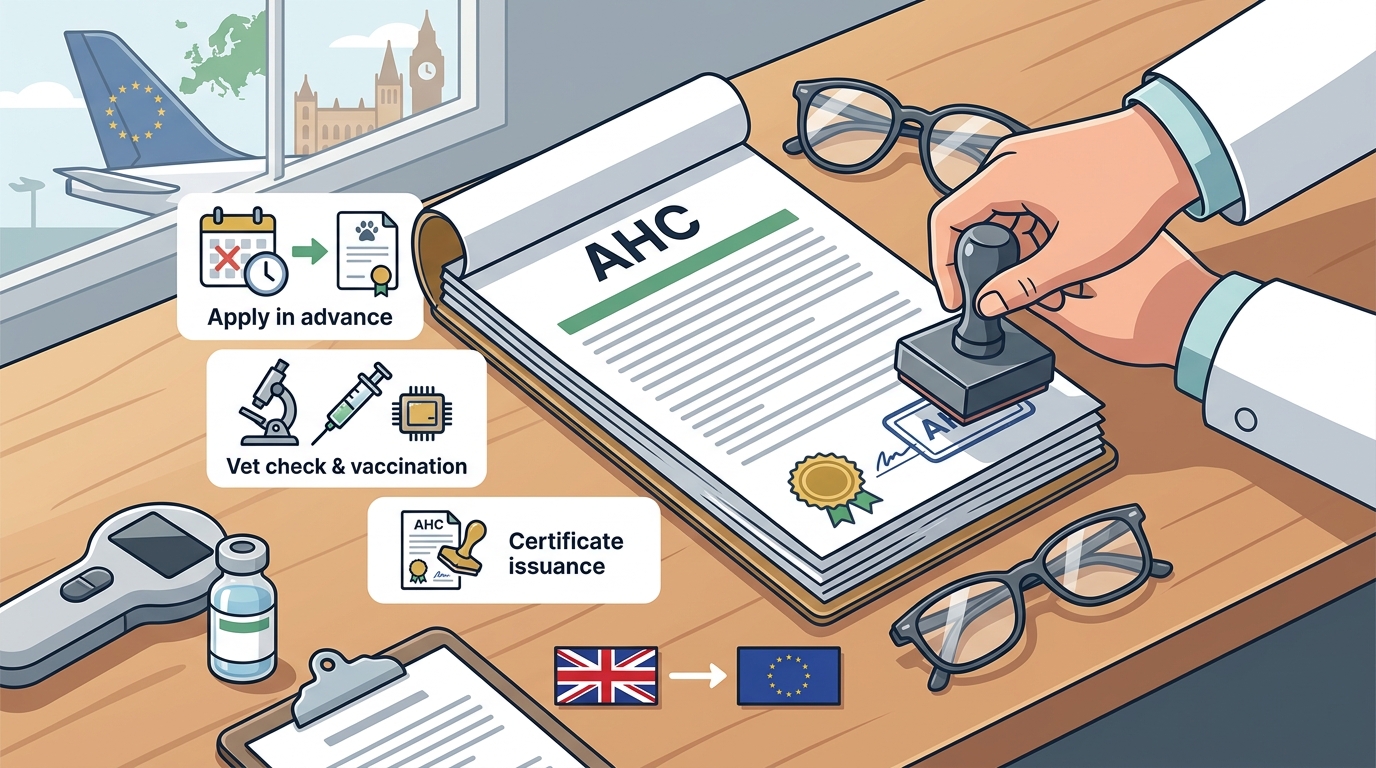
Step 1: Microchip Your Pet
Your pet must have a microchip that meets ISO 11784/11785 standards. The microchip must be implanted before the rabies vaccination is administered. If your pet is already microchipped, simply ensure the number is recorded accurately in your vet records.
Step 2: Get a Rabies Vaccination
Your pet must be vaccinated against rabies. Pets must be at least 12 weeks old to receive the vaccine. After the first rabies vaccination, you must wait a minimum of 21 days before your pet can travel. If your pet has a current, in-date rabies booster, no additional waiting period applies. Check your frequently asked questions page for more detail on vaccination timing.
Step 3: Book an Official Veterinarian Appointment
The AHC must be signed by an Official Veterinarian (OV), which is a vet who has completed additional government-approved export training. Not every vet practice holds OV status, so confirm this when booking. An OV is a veterinarian authorised by the UK's Animal and Plant Health Agency (APHA) to certify export health documents. You can book your AHC appointment with Vet Home Certs, where our network of OVs across the UK makes the process convenient and affordable.
Schedule the appointment no more than 10 days before your travel date. Bring proof of your pet's microchip number and rabies vaccination history to the visit.
Costs and Timing
AHC costs vary significantly across the UK. Some practices charge upwards of £200 to £350 per pet. At Vet Home Certs, prices start from just £79, offering a more affordable option without compromising on quality or compliance.
| Factor | Details |
|---|---|
| AHC validity for EU entry | 10 days from date of issue |
| AHC validity for onward EU travel and UK return | Up to 4 months |
| Minimum wait after first rabies jab | 21 days |
| Minimum pet age for rabies vaccine | 12 weeks |
| Typical AHC cost (UK average) | £90 to £200+ |
| Vet Home Certs price | From £79 |
| Maximum pets per certificate | 5 |
Timing is critical. Book your OV appointment so that the certificate is issued within the 10-day window before departure. If you travel on day 11 or later, the certificate will be invalid and you could be refused entry at the border.
Tapeworm Treatment and Extra Requirements
If you are travelling with a dog to Ireland, Finland, Malta, or Norway, your dog must receive a vet-administered tapeworm (Echinococcus) treatment. This must be given between 24 and 120 hours before arrival in those countries, and the treatment must be recorded in the AHC.
Tapeworm treatment is not required for cats or ferrets. For dogs travelling to other EU destinations, tapeworm treatment is not mandatory for entry but will be needed before returning to the UK. Read our pet travel tips for practical advice on managing these requirements while abroad.
Returning to the UK With Your Pet
When returning to Great Britain from the EU, you can use the same AHC that was issued for your outward journey, provided you return within four months. For dogs, you will need a tapeworm treatment administered by a vet between 24 and 120 hours before re-entering the UK. You must also travel on an approved route and have your pet's documents and microchip checked at the point of entry. For guidance on the return journey, visit our EU to UK travel guide.
Key Takeaways
- An Animal Health Certificate is required for every trip from the UK to the EU with a dog, cat, or ferret.
- Your pet must be microchipped before receiving a rabies vaccination.
- A 21-day waiting period applies after the first rabies jab before travel is allowed.
- The AHC must be issued by an Official Veterinarian no more than 10 days before travel.
- As of April 2026, EU pet passports held by GB residents are no longer valid for EU entry.
- Tapeworm treatment is required for dogs travelling to Ireland, Finland, Malta, and Norway.
- Vet Home Certs offers AHCs from £79, well below the UK average.
Frequently Asked Questions
What is an Animal Health Certificate?
An Animal Health Certificate is an official veterinary document that certifies your pet meets EU health and vaccination requirements for travel from the UK. It must be issued by an Official Veterinarian.
How long is an AHC valid for?
The AHC is valid for EU entry within 10 days of issue. Once you have entered the EU, it remains valid for onward travel and UK return for up to four months.
Can I still use an EU pet passport?
As of 22 April 2026, GB residents can no longer use EU pet passports for travel to the EU, even if the passport was previously issued in an EU country. An AHC is now required for every trip.
How much does an Animal Health Certificate cost?
Costs vary widely. Some UK vet practices charge £200 or more. Vet Home Certs offers Animal Health Certificates from just £79 per pet.
Do I need a new AHC for every trip?
Yes. The AHC is a single-use document. You must obtain a new certificate each time you travel from the UK to the EU.
Does my cat need tapeworm treatment?
No. Tapeworm treatment requirements apply only to dogs, and only when travelling to Ireland, Finland, Malta, or Norway, or when returning to the UK.
How far in advance should I book my AHC appointment?
Book your OV appointment so that the certificate is issued within 10 days of your departure date. If you need a first rabies vaccination, allow at least 21 days on top of that for the waiting period.
Which areas does Vet Home Certs cover?
Vet Home Certs operates through a network of Official Veterinarians across the UK. Check our areas covered page for full details.
Get Your Animal Health Certificate Today
Travelling to Europe with your pet does not have to be stressful or expensive. Vet Home Certs makes the AHC process simple, with prices starting from £79 and a nationwide network of qualified Official Veterinarians. Book your Animal Health Certificate now and travel with confidence.