

Since Brexit took effect on 1 January 2021, UK pet owners can no longer use GB-issued pet passports to travel with dogs, cats, or ferrets to the EU. Instead, you need an Animal Health Certificate (AHC) for every trip. An AHC is an official document issued by an Official Veterinarian (OV) that certifies your pet meets EU health requirements for cross-border travel. The process can feel overwhelming, but it is straightforward once you understand each step. This guide walks you through everything you need to do, from microchipping to boarding your ferry or flight.
What Is an Animal Health Certificate?
An Animal Health Certificate (AHC) is a multi-page official document issued by a government-authorised Official Veterinarian that certifies your pet is fit and eligible to travel from the UK to an EU country. It replaced GB-issued pet passports following Brexit in January 2021.
The AHC covers microchip verification, rabies vaccination status, clinical examination results, and a signed owner declaration. According to the UK Government guidance, you can add up to five pets to a single certificate. Unlike the old pet passport, the AHC is single-use, meaning you need a new one for every trip to the EU.
Who Needs an AHC After Brexit?
Any UK resident travelling from Great Britain (England, Wales, and Scotland) to an EU country or Northern Ireland with a dog, cat, or ferret must obtain an AHC. This requirement applies regardless of whether you are travelling for leisure or business.
As of 22 April 2026, the EU's updated Animal Health Law also means that EU pet passports held by non-EU residents are no longer valid for entry. If you previously obtained an EU pet passport while travelling in Europe, it can no longer be used. The only accepted document for UK residents entering the EU with a pet is a current AHC.
Step-by-Step Process to Get Your AHC
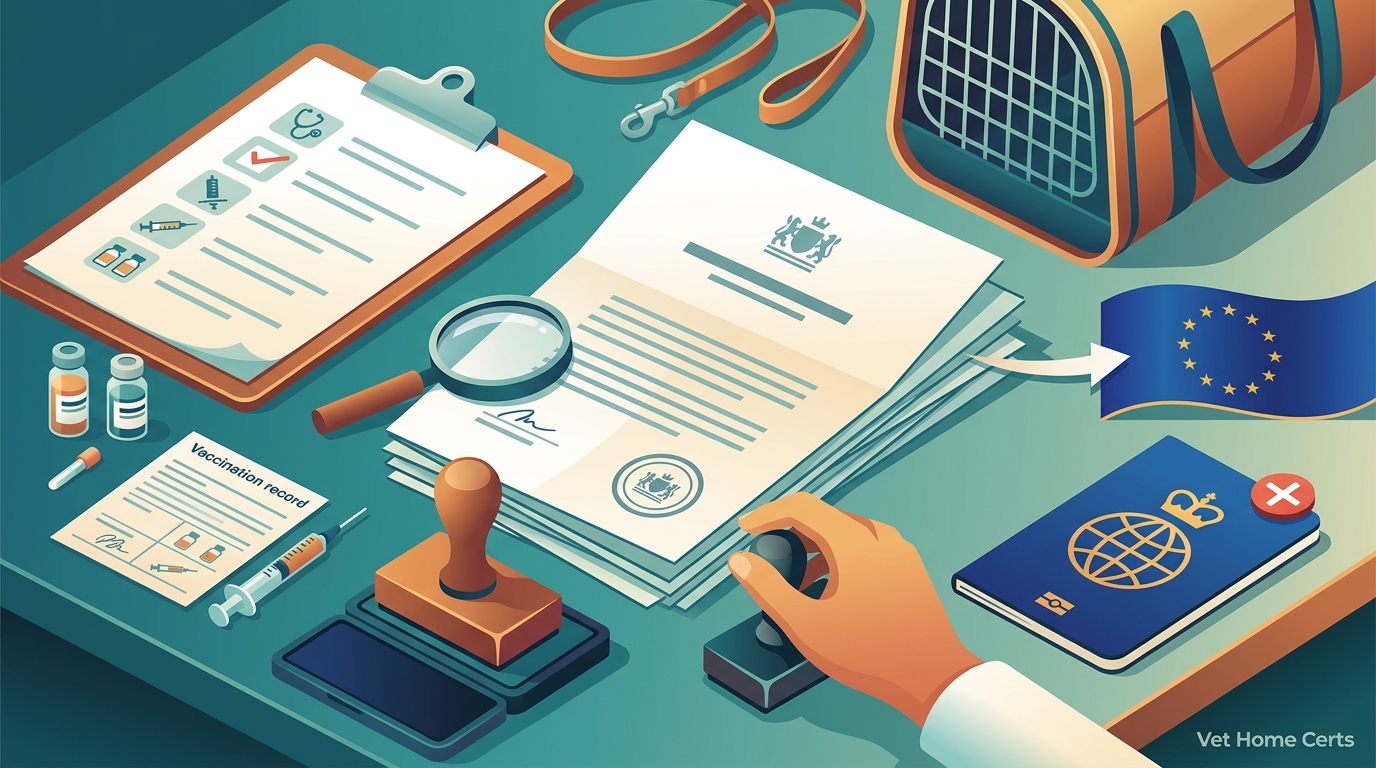
1. Get Your Pet Microchipped
Your pet must have a microchip implanted before any rabies vaccination is administered. The microchip must comply with ISO 11784/11785 standards. Most UK vets can perform this quickly during a routine appointment. If your pet is already microchipped, simply ensure the chip is scannable and matches your records.
2. Vaccinate Against Rabies
Your pet must receive a valid rabies vaccination. Pets must be at least 12 weeks old before they can be vaccinated. After the primary vaccination, you must wait a minimum of 21 days before your pet is eligible to travel. Keep the vaccination certificate safe, as your OV will need to see it when issuing the AHC.
3. Book an Appointment With an Official Veterinarian
An Official Veterinarian (OV) is a vet who has completed additional government-approved export training. Not all vets hold OV status, so confirm this before booking. Book your AHC appointment no earlier than 10 days before your travel date. During the visit, bring proof of your pet's microchip date and full vaccination history. The OV will examine your pet, verify documents, and complete the certificate.
Costs and Timing Compared
AHC pricing varies significantly across the UK. Some practices charge over £300, while services like Vet Home Certs offer certificates from just £79, providing a convenient and affordable alternative.
| Factor | AHC (Post-Brexit) | Old EU Pet Passport |
|---|---|---|
| Validity for EU entry | 10 days from issue | Lifetime (with valid rabies) |
| Reusable? | No, single-use per trip | Yes, multiple trips |
| Onward EU travel | Up to 4 months | Continuous |
| Typical cost | £79 to £350+ | One-off fee (approx. £50 to £100) |
| Issuer | UK Official Veterinarian | EU-based vet |
| Available to UK residents (2026)? | Yes | No longer valid |
Planning ahead is essential. Because the certificate is only valid for 10 days from issue, you need to time your vet appointment carefully to align with your departure date.
Common Mistakes to Avoid
Many pet owners run into problems that delay or invalidate their AHC. Here are the most frequent errors:
- Getting vaccinated before microchipping: The rabies vaccine must be administered after the microchip is in place, or the vaccination is considered invalid.
- Booking the vet too early: If your OV appointment is more than 10 days before travel, the certificate will expire before you reach the EU.
- Not confirming OV status: A standard vet cannot issue an AHC. Always verify your vet holds OV certification. Check areas covered by Vet Home Certs to find an OV near you.
- Forgetting the owner declaration: The AHC includes sections that require the owner's signature. Missing this can cause rejection at the border.
- Ignoring tapeworm rules: If you are travelling to Ireland, Finland, Malta, or Norway with a dog, a tapeworm treatment must be administered 1 to 5 days before arrival.
Returning to the UK With Your Pet
The good news is that returning to the UK is simpler. Your AHC remains valid for re-entry for up to 4 months from the date of issue, provided your pet's rabies vaccination has not expired. You can also use it for onward travel between EU countries during this period.
For dogs returning to Great Britain, you must arrange a vet-administered tapeworm treatment between 24 and 120 hours before re-entering the UK. This treatment must be recorded in your AHC. You must also travel via an approved route and have your pet's documents and microchip checked at the point of entry.
Key Takeaways
- An Animal Health Certificate is required for every trip from the UK to the EU with a dog, cat, or ferret.
- Your pet must be microchipped first, then vaccinated against rabies, with a 21-day wait before travel.
- The AHC must be issued by an Official Veterinarian no more than 10 days before your departure.
- EU pet passports held by UK residents are no longer valid for EU entry as of April 2026.
- Costs range from £79 to over £300 depending on the provider.
- The AHC is valid for return to the UK and onward EU travel for up to 4 months.
- Dogs returning to the UK need a tapeworm treatment 1 to 5 days before arrival.
Frequently Asked Questions
How long does an Animal Health Certificate last?
The AHC is valid for 10 days from the date of issue for entering the EU. Once you have entered the EU, it remains valid for onward travel between EU countries and re-entry to the UK for up to 4 months.
Can I still use my EU pet passport after Brexit?
As of 22 April 2026, EU pet passports held by UK residents are no longer accepted for travel from the UK to the EU. You must obtain a new AHC for each trip.
How much does an Animal Health Certificate cost?
Prices vary widely. Some vet practices charge over £300, but affordable options exist. Vet Home Certs offers AHCs from £79, making pet travel more accessible.
Do I need a new AHC for every trip?
Yes. The AHC is a single-use document. You need a fresh certificate each time you travel from the UK to the EU, even if your pet's health status has not changed.
What pets need an Animal Health Certificate?
Dogs, cats, and ferrets travelling from the UK to any EU country or Northern Ireland require an AHC. Other species may have different export requirements.
Can any vet issue an AHC?
No. Only an Official Veterinarian (OV) who has completed government-approved export training can issue an AHC. Check with your vet beforehand or contact Vet Home Certs for assistance.
What happens if my AHC expires before I travel?
If more than 10 days have passed since the certificate was issued, it is no longer valid for EU entry. You will need to book another OV appointment and obtain a new AHC.
Do cats and ferrets need tapeworm treatment?
No. Tapeworm treatment requirements apply only to dogs, and only when travelling to Ireland, Finland, Malta, or Norway, or when returning to the UK.
Ready to Book Your Animal Health Certificate?
Do not leave your pet's travel documents to the last minute. Book your AHC with Vet Home Certs today starting from just £79. Our network of Official Veterinarians across the UK makes the process simple, convenient, and affordable. Check our FAQs page for more details or browse our blog for the latest pet travel advice.